 Collingwood Handyman Services
 › Blog › Who Can Close and Secure My Cottage for the Winter in Simcoe County?
← All articlesWho Can Close and Secure My Cottage for the Winter in Simcoe County?
Key takeaways
- A local handyman can handle security, weatherproofing, minor repairs, photo documentation, scheduled checks, and coordination for a cottage closing.
- Use qualified specialists for plumbing winterization, electrical repairs, fuel-burning equipment, septic systems, chimneys, major roof damage, and hazardous trees.
- Build the closing plan around five zones: water, heat and power, building envelope, security and access, and documentation.
- Your own insurance policy determines the required winter inspection schedule and documentation requirements.
- Request a written scope that distinguishes handyman tasks, specialist work, recurring visits, reporting, and emergency spending authority.
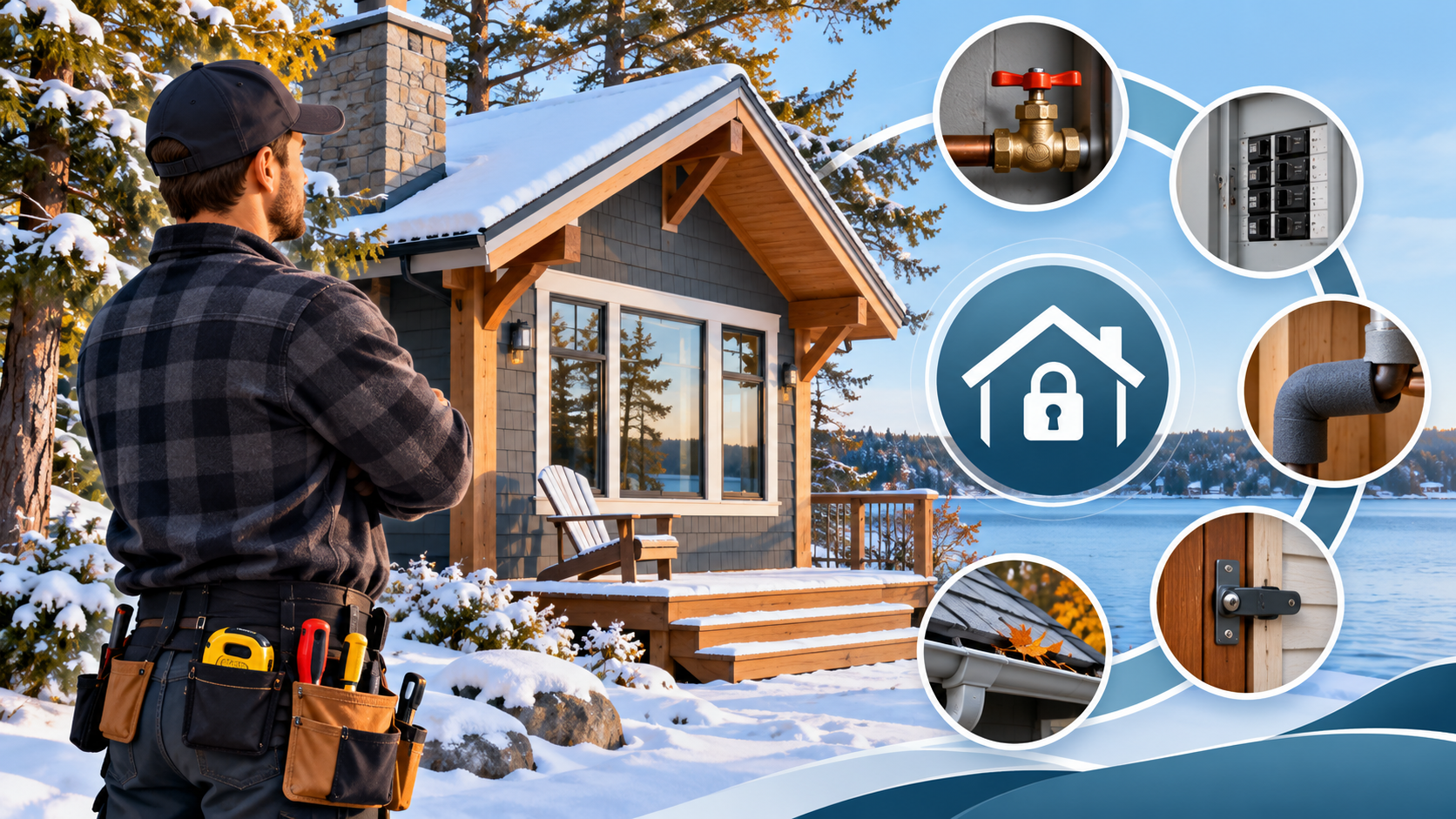
Collingwood Handyman can complete the practical, non-specialized parts of cottage closing in much of Simcoe County: security checks, weatherproofing, minor repairs, photo reports, access management, and scheduled winter visits. For plumbing winterization, electrical work, fuel-burning equipment, septic systems, and major storm damage, use the appropriate qualified specialist.
The practical answer: use a handyman plus the right trades
Closing a cottage properly is rarely one job. It is a coordinated sequence of property maintenance, winterization, security, and documentation tasks. A local handyman is often the most useful first contact because they can inspect the full property, complete routine work, identify visible risks, and coordinate specialists before the building is left unattended.
Collingwood Handyman publishes cottage-maintenance support for seasonal properties in Collingwood, Wasaga Beach, Blue Mountains, Thornbury, Meaford, Stayner, Elmvale, and the Midland–Penetanguishene area. Confirm the exact address, driveway access, and number of buildings before booking, particularly for rural, waterfront, island-access, or snow-restricted properties.
A handyman is well suited to work such as:
- Locking and testing doors, windows, sheds, gates, and outbuildings.
- Replacing basic weatherstripping, door sweeps, damaged hardware, and deteriorated caulking.
- Removing or securing furniture, planters, dock accessories, barbeques, ladders, and loose exterior items.
- Completing minor repairs to trim, drywall, cabinets, flooring, decks, railings, fences, and screens.
- Photographing existing conditions, completed tasks, equipment areas, and access points.
- Checking for visible storm damage, forced-entry signs, leaks, snow-load concerns, or fallen branches.
- Providing recurring property checks and reporting issues to an owner who is away.
The dividing line is important: a handyman can observe, document, and coordinate technical problems, but a qualified trade should perform work involving systems that need specialized diagnostics, regulated work, permits, certification, or manufacturer-specific procedures.
A Simcoe County cottage closing plan: the five-zone method
To make a closing visit more reliable, organize the property into five zones. This is a practical handoff method owners can use when requesting a quote or reviewing a photo report.
1. Water zone: prevent freeze damage
The water zone includes the main shutoff, water heater, pressure tank, well equipment, pump controls, filters, toilets, sinks, outdoor taps, and plumbing in crawlspaces or unheated rooms.
Your closing plan should identify whether the cottage is on municipal water, a drilled well, a lake-water system, or a seasonal pump system. Those details change the correct winterization procedure.
For example, a cottage with a well pump and pressure tank may require a plumber to drain lines, deal with the water heater, and follow the system’s winterization procedure. A cottage on municipal service may still need interior plumbing drained even after the owner shuts off water inside the building.
For properties in Collingwood, the Town’s water by-law places responsibility on the owner to shut off water from inside the premises and drain interior piping when a building is vacant or without heat. Municipal shutoff procedures are separate from that owner responsibility, so check local requirements rather than assuming one municipality’s procedure applies throughout Simcoe County. See the Town of Collingwood Water By-law.
Closing question to answer in writing: “If heat fails overnight, which pipes or equipment are most likely to freeze first?” A plumber should assess that question where the answer is unclear.
2. Heat and power zone: preserve essential operation
Not every circuit should be turned off. A cottage may need power for a furnace, boiler, heat pump, sump pump, well pump, alarm panel, internet gateway, cameras, monitored temperature sensor, or septic alarm.
Hydro One’s Seasonal Cottage Closing Checklist recommends planning for water drainage, appliance and electrical preparation, heating, outage awareness, and vegetation near power lines. Before anyone flips breakers, create a simple “leave on / turn off” list taped inside the electrical-panel door.
A useful panel note might read:
| Circuit or system | Winter instruction | Why it matters |
|---|---|---|
| Furnace or boiler | Leave on | Maintains safe indoor temperature |
| Sump pump | Leave on | Helps manage water infiltration |
| Well pump | Follow plumber’s instruction | Depends on winterization method |
| Hot-water heater | Follow plumber’s instruction | Depends on whether system is drained |
| Kitchen receptacles | Turn off if not needed | Reduces unnecessary loads |
| Internet and alarm | Leave on if monitored | Supports alerts and remote access |
A handyman can label equipment, verify that the planned circuits remain powered, and report visible concerns. Electrical-panel modifications, new wiring, damaged conductors, and electrical repairs belong with a Licensed Electrical Contractor. Ontario’s Electrical Safety Authority explains why consumers should use an appropriately licensed contractor for electrical work.
3. Building-envelope zone: keep weather outside
The building envelope is the barrier created by the roof, walls, windows, doors, vents, flashing, caulking, and drainage. A small gap can become a major problem if it lets wind-driven snow, rain, rodents, or cold air into an unoccupied cottage.
A closing inspection should include:
- Door latches, deadbolts, hinges, strike plates, and sliding-door tracks.
- Window locks, screens, basement windows, and exterior vent covers.
- Weatherstripping and door sweeps, especially on lake-facing doors exposed to wind.
- Visible roof-edge issues, loose eavestrough sections, downspouts, and drainage paths.
- Deck stairs, railings, loose boards, and exterior lighting near entrances.
- Sheds, boathouses, garages, and any building holding tools, fuel, or water equipment.
Example: If a side door has a 6 mm gap at the bottom, the immediate handyman task may be to install a suitable door sweep and adjust the latch. If water staining is visible above that door, the follow-up may require a roofer or building-envelope specialist. A good report separates the completed repair from the unresolved cause.
4. Security and access zone: make winter response possible
Security is not only about locking up. It is also about ensuring someone can enter safely after an alert, storm, or power outage.
Prepare one controlled access package containing:
1. Property address and GPS-friendly directions.
2. Gate, driveway, bridge, or private-road instructions.
3. Lockbox location and code-management process.
4. Alarm instructions and monitoring-company contact information.
5. Main water-shutoff and electrical-panel locations.
6. Snow-clearing responsibility and safe parking location.
7. Owner, neighbour, insurer, and trade contacts.
8. Written authority for emergency spending and temporary protection work.
Avoid leaving the only key in an obvious outdoor hiding place. A weather-rated lockbox, documented key-holder list, and updated alarm instructions are more useful during a real winter event.
5. Documentation zone: create an insurance-ready record
The most valuable closing report is one that can answer basic questions months later: What was checked? When? What did the cottage look like? What changed? Who was called?
Ask for a dated report with labelled photos of:
- Front, rear, and side access points.
- Main living area and utility room.
- Thermostat or heating indicator, where safely visible.
- Water shutoff, pump or pressure system, and any leak-prone area.
- Electrical panel exterior and critical equipment status, without unsafe panel work.
- Sump-pump area, crawlspace access, and basement floor where applicable.
- Storm debris, snow accumulation, damaged trees, or roof-edge concerns.
- Work completed and materials used.
Keep reports, invoices, specialist records, and owner approvals in one cloud folder named by season, such as Cottage / Winter 2025-26 / Closing / Checks / Repairs. That is far more useful than scattered text messages when an insurer, plumber, or future buyer needs a timeline.
Which tasks require a specialist?
Use a handyman to manage the property and a specialist to manage the system. The following jobs should be escalated rather than treated as general maintenance:
Plumbing and winterization
Use a qualified plumber for pipe drainage, winterization of water systems, water-heater work, concealed leaks, backflow devices, pump-system faults, and uncertain well or lake-water setups. Ask the plumber to state in writing whether the system was drained, shut down, supplied with antifreeze where appropriate, or left heated and operational.
Electrical work
Use a Licensed Electrical Contractor for electrical repairs, service equipment, wiring, panel work, outlets, damaged cables, or suspected electrical hazards. Never ask a property-check visitor to investigate fallen or low power lines; contact the utility and keep clear.
Heating, propane, oil, fireplaces, and chimneys
Furnace repairs, boiler service, combustion concerns, fuel-burning equipment, propane systems, and chimney or flue work need an appropriately qualified professional. The Technical Standards and Safety Authority provides Ontario safety information for fuels-related equipment.
Septic, structural, roofing, and tree work
Septic alarms, sewage odours, pump failures, drain-field concerns, structural movement, major roof damage, and hazardous trees need specialized assessment. A handyman can photograph the condition, limit access, install temporary protection where safe, and coordinate the callout.
How often should a winter cottage be checked?
Your insurance policy—not a generic online schedule—should determine the minimum inspection interval. Insurers may set conditions relating to vacancy, heating, water shutoff, or regular checks, and policy language can differ significantly.
Before scheduling recurring visits, ask your insurer or broker these four questions:
1. What is the required inspection frequency while the cottage is vacant?
2. Does the policy define who may conduct the inspection?
3. Must the visit verify heat, power, plumbing, or water shutoff?
4. What evidence should I retain if I need to make a claim?
The Insurance Bureau of Canada advises homeowners to take winter precautions and review coverage. Keep your own policy wording as the controlling document.
In addition to scheduled checks, authorize extra visits after a prolonged power outage, heavy snow, freezing rain, high winds, a low-temperature alert, a water alarm, or a reported break-in.
What does cottage closing cost in Simcoe County?
Cost depends on property size, travel distance, number of buildings, access conditions, repair needs, report detail, and whether specialist coordination is required. Collingwood Handyman publishes a $150 minimum service-call size, with quote responses typically within 24–48 hours and planned scheduling within 1–2 weeks. Confirm current pricing, availability, and travel requirements in writing before booking.
Request a scope that separates:
- Closing and security tasks.
- Minor repairs and materials.
- Photo reporting and winter-check frequency.
- Outbuildings, docks, sheds, decks, and exterior storage.
- Snow or storm-response authority.
- Specialist work that is excluded from the handyman scope.
A clear scope prevents a common cottage-owner problem: assuming “winterization” includes plumbing, heating, and septic work when the booked provider only intended to complete exterior maintenance.
Booking checklist for a successful closing visit
Send these details with your request:
- Exact address and desired closing date.
- Number of buildings and any detached garage, shed, boathouse, or bunkie.
- Photos of known issues and utility areas.
- Water source, septic details, heating type, and internet/alarm setup.
- Insurance inspection requirements.
- Driveway, gate, parking, and snow-access instructions.
- Existing plumber, electrician, HVAC, septic, and chimney contacts.
- Emergency spending limit and communication preferences.
Collingwood Handyman can be the practical coordinator for a documented, secure cottage closing—provided the written plan clearly assigns technical system work to qualified specialists.
FAQ
Can a handyman winterize my cottage plumbing?
A handyman can identify the shutoff, prepare access, document visible conditions, and coordinate the appointment. Plumbing drainage, pump-system winterization, water-heater work, and uncertain water-system procedures should be completed by a qualified plumber.
Does Collingwood Handyman serve all of Simcoe County?
The published service area includes Collingwood, Wasaga Beach, Blue Mountains, Thornbury, Meaford, Stayner, Elmvale, and the Midland–Penetanguishene region. Provide the exact address to confirm availability for your property.
Should I turn off every electrical breaker before leaving?
No. Some cottages need continuous power for heating, a sump pump, alarm system, internet equipment, well equipment, or other essential systems. Make a property-specific leave-on/turn-off list and use a Licensed Electrical Contractor for electrical changes or repairs.
What should a winter property-check report include?
It should include the date, access conditions, photographs, observed heat/power/water conditions where safely verifiable, visible damage, completed work, recommended follow-up, and any emergency action taken or awaiting approval.
References
- https://collingwoodhandyman.ca/services/cottage-maintenance
- https://collingwoodhandyman.ca
- https://www.currentplumbing.ca/services/cottage-winterization
- https://plumbtechplumbing.com/residential/cottage-services/fall-closing-services
- https://peakplumbing.ca/cottage-plumbing-georgian-bay
- https://cottagecarecompany.ca/services/season-turn
FAQ
Can a handyman winterize my cottage plumbing?
A handyman can identify shutoffs, prepare access, document conditions, and coordinate service. Pipe drainage, pump-system winterization, water-heater work, and uncertain water-system procedures should be handled by a qualified plumber.
Does Collingwood Handyman serve all of Simcoe County?
Its published coverage includes Collingwood, Wasaga Beach, Blue Mountains, Thornbury, Meaford, Stayner, Elmvale, and the Midland–Penetanguishene region. Confirm the exact address before booking.
Should I turn off every electrical breaker before leaving?
No. Heating, sump pumps, alarms, internet equipment, and some water-system components may need power. Use a property-specific circuit list and a Licensed Electrical Contractor for electrical work.
What should a winter property-check report include?
Request dated notes and photos of access points, visible property condition, safely verifiable heat/power/water indicators, completed work, recommended follow-up, and any emergency action or approval required.