 Collingwood Handyman Services
 › Blog › Who Can Repair Siding, Soffits, and Fascia Around a Collingwood Home?
← All articlesWho Can Repair Siding, Soffits, and Fascia Around a Collingwood Home?
Key takeaways
- A handyman is suitable for small, accessible, clearly defined siding, soffit, fascia, trim, and caulking repairs.
- Use an exterior, roofing, or gutter specialist when there is active water entry, widespread rot, flashing failure, unsafe height, or multiple connected systems.
- Fascia damage often starts with a drainage or roof-edge problem, so inspect gutters, downspouts, drip edge, and roof flow before replacing boards.
- Get a written scope that identifies the material, location, access method, hidden-damage process, drainage checks, and warranty terms.
- Escalate soffit repairs involving exposed wiring, attic ventilation problems, or wildlife entry to the appropriate qualified professional.
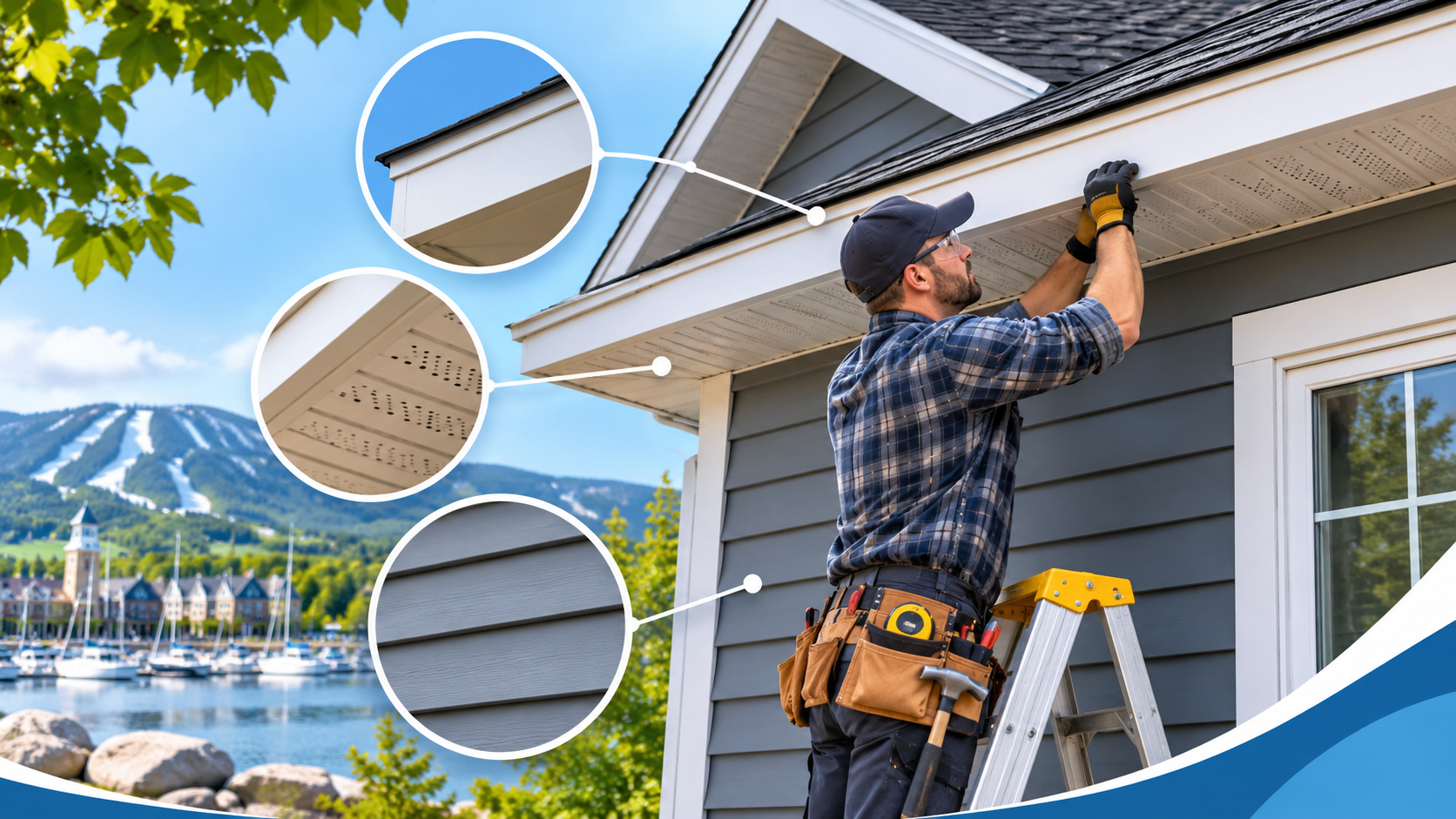
For a small, accessible repair around a Collingwood home, an experienced handyman may be the right choice. Hire a siding, roofing, or exterior contractor when damage involves leaks, rot, roof-edge flashing, gutters, multiple storeys, or large replacement areas. The key is fixing the cause—not only covering the visible damage.
The Short Answer: Match the Trade to the Problem
Siding, soffit, and fascia repairs can fall within the scope of a qualified handyman, but not every exterior issue is a handyman job. The right provider depends on four practical questions:
1. Is the damage isolated or widespread?
2. Is there evidence of water, rot, or failed flashing behind the surface?
3. Can the work be completed safely from the ground or a properly positioned ladder?
4. Does the repair involve another system, such as roofing, eavestroughs, electrical wiring, wildlife exclusion, or structural framing?
A loose vinyl panel at ground level is very different from soft fascia beneath an overflowing gutter on a two-storey roof edge. Both may look minor from the driveway, but the second can involve drainage, concealed wood rot, access equipment, and roof-to-wall flashing.
Who Repairs What? A Collingwood Exterior Repair Guide
A handyman is often suitable for small, defined repairs
A handyman with exterior carpentry experience can be a good fit when the work is visible, limited, accessible, and does not appear to involve water damage behind the cladding.
Common examples include:
- Refastening one or two loose vinyl or aluminum siding panels
- Replacing a small section of damaged trim or corner post
- Replacing an accessible soffit panel after wind or animal damage
- Repairing a short length of fascia where the wood is otherwise sound
- Replacing exterior caulking around a trim joint
- Repairing minor wood rot in an accessible decorative trim board
- Reattaching a downspout extension or securing loose gutter hardware when the fascia is sound
- Painting or sealing a repaired wood fascia section
For these jobs, the most important qualification is not the word “handyman.” It is whether the provider has worked with the same material and can explain how they will remove, match, fasten, flash, caulk, and finish it.
Use a siding or exterior contractor for wall-system repairs
A dedicated siding or exterior contractor is usually the better choice when the repair extends behind the visible siding or affects a broad area of the home’s exterior.
Call an exterior specialist when you have:
- Multiple damaged siding panels across a wall or elevation
- Cracked, warped, faded, or discontinued siding that must be colour- and profile-matched
- Soft sheathing, swollen wall materials, or staining beneath siding
- Failed window or door trim transitions
- Missing or damaged house wrap, drainage plane, or flashing
- Fibre-cement, engineered wood, stucco, or specialty cladding repairs
- A full wall, gable, dormer, or chimney-side replacement
Siding is not simply decorative. It is part of a layered assembly that must shed rain and allow water that gets behind the cladding to drain. Installation details, including clearances, flashing, and fastening, matter; the Vinyl Siding Institute installation manual is a useful reference for why a panel that looks properly installed can still perform poorly if its surrounding details are wrong.
Use a roofer or eavestrough contractor for roof-edge causes
Fascia damage is often a symptom rather than the original problem. The source may be a leaking roof edge, ice damming, failed drip edge, blocked eavestrough, loose gutter bracket, or downspout that discharges too close to the foundation.
Bring in a roofing or gutter specialist when:
- Water appears at the roof edge after rain or snowmelt
- Gutters are pulling away from the fascia
- Water regularly spills over the front or back of the trough
- Fascia boards are soft along long sections
- Shingles, drip edge, or roof flashing are visibly damaged
- Ice buildup repeatedly forms at the eaves
A useful rule: if the repair requires removing gutters to discover why the fascia is rotting, treat it as a roof-drainage repair first and a carpentry repair second. Replacing the fascia without correcting overflow can lead to the same failure within another season.
Use an electrician or wildlife professional when required
Soffits can conceal electrical wiring, pot-light connections, bath fan ducts, attic ventilation components, and animal nesting areas. A general repair provider should stop and refer the work when those conditions appear.
Use an appropriately qualified professional if there is:
- Exposed, damaged, or unidentified wiring
- A soffit-mounted light fixture or electrical box affected by water
- Signs of birds, squirrels, raccoons, bats, wasps, or other wildlife
- Droppings, nesting material, chewed insulation, or odour in the attic
- A bathroom fan duct disconnected near the soffit
In Ontario, electrical work must follow applicable safety rules, and homeowners should use a Licensed Electrical Contractor for electrical installation or repair work. Animal entry should be addressed with proper exclusion before the opening is permanently closed; otherwise, animals can become trapped in the attic or wall cavity.
The Collingwood Exterior Triage Matrix
Use this practical three-level framework before requesting quotes. It is designed to help homeowners describe the repair clearly and direct the work to the right trade.
Green: Small maintenance repair
Typical condition: One loose panel, one cracked soffit insert, a short trim split, or minor caulking failure.
Access: Ground level or a safe, straightforward ladder position.
Likely provider: Exterior-experienced handyman.
Example: A windstorm loosens one vinyl siding panel beside a ground-floor patio door. The wall is dry, the panel has not cracked, and no trim or flashing is disturbed. Re-locking or replacing that panel is normally a defined repair.
Yellow: Investigation before repair
Typical condition: Staining, recurring loose materials, a gutter that overflows, fascia paint peeling in the same location, or a soffit opening near an attic vent.
Access: May involve a second-storey ladder, roof-edge work, or removal of a small area to inspect behind it.
Likely provider: Experienced handyman for assessment and limited work, with a siding, roofing, gutter, or wildlife referral if the cause is larger.
Example: A homeowner sees a 1.5-metre section of fascia with peeling paint and dark staining below the gutter. The repair might be limited to fascia replacement—but only after checking the gutter slope, downspout blockage, roof drip edge, and condition of the wood behind the trough.
Red: Specialist or urgent response
Typical condition: Active leak, soft or collapsing fascia, detached overhead siding, sagging gutter, visible roof damage, exposed wiring, widespread rot, or an animal-entry opening.
Access: Unsafe ladder setup, multiple storeys, steep roofline, or material hanging above a walkway.
Likely provider: Roofing, siding/exterior, eavestrough, electrical, wildlife-control, or structural professional, depending on the cause.
Example: A second-storey gutter is separating from soft fascia above a front entrance. Keep people away from the area and arrange prompt assessment. The immediate concern is falling material; the long-term concern is water damage at the roof edge.
What Should a Proper Inspection Include?
A useful exterior repair visit should identify both the visible defect and the likely water path. Ask the provider to inspect these connected components rather than quoting only the damaged board:
- Siding panel locks, fasteners, and expansion gaps
- Corner posts, J-channel, utility penetrations, and window trim
- Soffit intake vents and any blocked ventilation openings
- Fascia-board firmness, especially behind gutters
- Drip edge and roof-to-gutter water flow
- Gutter slope, joints, hangers, and downspout discharge
- Caulking at trim transitions—not as a substitute for flashing
- Signs of wet sheathing, mould staining, insect activity, or animal entry
A simple homeowner test can improve the assessment: photograph the area during or immediately after rain. A photo showing water running behind the gutter, overflowing at one corner, or staining the siding below an eave provides far more useful diagnostic information than a dry-weather photo alone.
Materials Matter: What the Repairer Needs to Know
Different exterior materials cannot be repaired the same way.
Vinyl siding
Vinyl expands and contracts with temperature changes. Panels should generally be able to move after installation; fastening them too tightly can cause buckling or distortion. A repairer should use the correct profile, leave appropriate movement, and avoid face-fastening unless the manufacturer’s detail specifically requires it.
Aluminum soffit and fascia
Aluminum can dent, crease, oxidize, or loosen in wind. Matching older colours can be difficult, and a repair may require replacing a larger continuous section for a cleaner appearance. Edges must be secured without crushing the material or blocking ventilation.
Wood fascia and trim
Wood can rot from repeated wetting, especially behind gutters and at roof returns. Sound repair involves removing deteriorated material, checking the adjacent substrate, priming end grain, and correcting the moisture source before repainting.
Fibre-cement or engineered wood
These products may require manufacturer-specific cutting, fasteners, clearances, and paint systems. Do not assume a general patch method is appropriate. Ask whether the provider has worked with the exact product or can obtain its installation instructions.
Permits, Safety, and Insurance in Collingwood
Minor like-for-like exterior maintenance may not require a permit, but structural changes, changes to building openings, major cladding renovations, or work affecting the building envelope can trigger additional requirements. Before starting a larger project, check the Town of Collingwood’s building permit information and ask who is responsible for permit applications if one is required.
For hired work, ask for proof of liability insurance and confirm workplace coverage where applicable. Ontario homeowners can request a contractor’s WSIB clearance status when the contractor is required to have coverage. A clearance does not assess workmanship, but it helps confirm that the contractor is in good standing with WSIB.
Do not treat a tall ladder as a minor detail. Wind, uneven ground, snow, icy paving, landscaping, and roof pitch can make a seemingly small repair unsafe. If access requires a lift, scaffolding, roof anchors, or working above an entrance, the quote should clearly include that access method.
What to Ask Before You Hire Someone
Use these questions to compare quotes and avoid a cosmetic-only repair:
- What caused this damage, and what evidence supports that conclusion?
- Are you repairing only the visible material or checking behind it for rot and wet sheathing?
- Will you inspect the gutter, roof edge, and downspout if fascia is damaged?
- What exact product, profile, colour, and finish will be used?
- Can you match the existing siding or will adjacent panels need replacement for appearance?
- Does the quote include material, labour, disposal, caulking, painting, and access equipment?
- How will concealed damage be photographed, priced, and approved before extra work proceeds?
- What insurance and workplace coverage applies to this job?
- What warranty applies to workmanship and supplied materials?
Avoid quotes that simply say “repair fascia” or “fix siding” without identifying the location, length, material, finish, and whether hidden deterioration is included or excluded.
Where Collingwood Handyman Fits
Collingwood Handyman can be a practical first contact for small, clearly defined, accessible repairs such as a loose siding panel, limited soffit replacement, exterior trim repair, caulking, minor carpentry, and touch-up finishing.
The work should be escalated when assessment identifies active leakage, extensive rot, unsafe roofline access, widespread siding failure, animal activity, electrical concerns, structural damage, or a drainage/roofing problem. A responsible repair provider should be comfortable recommending the right specialist rather than attempting work outside the safe or appropriate scope.
FAQ
Can a handyman repair a loose siding panel in Collingwood?
Yes, when the panel is isolated, accessible, and there are no signs of water entry, damaged flashing, rotted sheathing, or widespread siding failure. The handyman should be familiar with the siding profile and proper fastening method.
Who should repair rotted fascia boards?
A handyman may repair a short, accessible section of rot if the cause is known and corrected. Hire a roofing, gutter, or exterior contractor when rot is widespread, gutters are overflowing, the roof edge is leaking, or the work requires significant height access.
Should I repair gutters at the same time as fascia?
Usually, yes. Fascia frequently deteriorates because water is overflowing, leaking through gutter joints, or being trapped behind a poorly performing gutter system. Inspecting drainage before replacing fascia helps prevent repeat damage.
Is damaged soffit an urgent repair?
It is urgent when material is loose overhead, there is an opening into the attic, animals are entering, wiring is exposed, or rain can enter the roof-edge assembly. A small stable cosmetic dent can generally be scheduled as routine maintenance.
Do I need a permit to replace siding, soffits, or fascia?
Small like-for-like repairs may not require one, but major renovations, structural changes, altered openings, and building-envelope work can have permit implications. Confirm the scope with the Town of Collingwood before beginning a larger project.
References
- https://collingwoodhandyman.ca
- https://gorillagutters.ca
- https://www.simcoemuskokasiding.com
- https://aingergroup.ca
- https://www.houzz.com/professionals/siding-and-exteriors/360-exteriors-pfvwus-pf~666117472
- https://phenxstucco.ca
FAQ
Can a handyman repair a loose siding panel in Collingwood?
Yes, when the panel is isolated, accessible, and there are no signs of water entry, damaged flashing, rot, or widespread siding failure.
Who should repair rotted fascia boards?
A handyman may repair a limited accessible section once the moisture source is corrected. Use a roofing, gutter, or exterior contractor for widespread rot, roof-edge leaks, or unsafe access.
Should gutters be repaired when fascia is damaged?
Yes. Fascia damage is often linked to gutter overflow, failed gutter joints, poor slope, or roof-edge drainage problems. Inspecting both systems helps prevent repeat deterioration.
Is damaged soffit urgent?
It is urgent when material is loose overhead, an opening allows animal or water entry, electrical components are exposed, or the attic is accessible through the damaged area.