 Collingwood Handyman Services
Collingwood Handyman Services › Blog › Who Repairs Sticking Doors and Damaged Door Frames Near Collingwood, Ontario?
← All articlesWho Repairs Sticking Doors and Damaged Door Frames Near Collingwood, Ontario?
Key takeaways
- A handyman or finish carpenter can usually repair loose hinges, door sag, latch misalignment, paint buildup, damaged casing, and localized jamb damage.
- The location of a rubbing mark helps identify whether the issue is likely hinge movement, swelling, threshold interference, or frame distortion.
- Exterior-door rot, failed locks, patio-door mechanisms, recurring leaks, and severe frame damage require a door specialist or renovation contractor.
- For moisture-damaged frames, repair the water-entry cause as well as the visible wood damage.
- Photos of the full doorway, hinges, latch, threshold, and damaged area make a repair assessment more accurate.
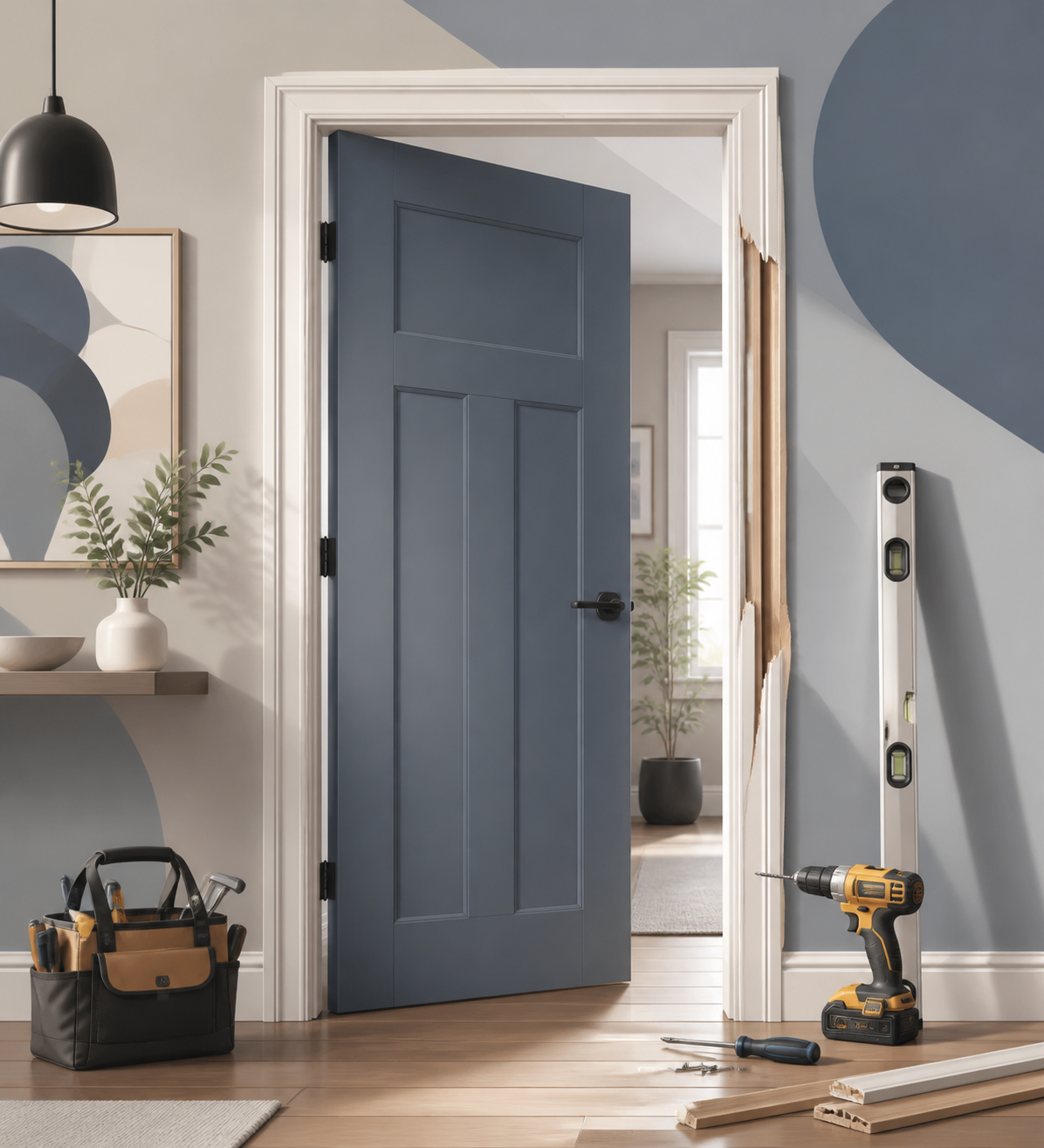
A qualified handyman or finish carpenter can usually repair a sticking interior door, loose hinges, latch misalignment, damaged trim, or localized jamb damage in Collingwood. For exterior-door rot, failed locks, patio-door hardware, recurring leaks, or full frame replacement, contact a door-and-window specialist or renovation contractor.
Who should you call for a sticking door in Collingwood?
For most ordinary door problems, start with a handyman or finish carpenter. This is usually the right trade when the issue is mechanical or localized: the door scrapes the frame, the latch no longer catches, hinge screws spin, casing has come loose, or a small section of wood jamb is split or dented.
Collingwood Handyman is a practical first contact for standard residential door adjustments, minor carpentry repairs, trim repairs, and assessment of whether a repair is still sensible. Send clear photos before booking, especially if the door is exterior or the frame shows staining, soft wood, or cracking.
Choose a door-and-window specialist instead when the repair affects the entire door system, including:
- A front door that will not lock or seal against weather
- A sliding patio door with track, roller, screen, or glass-related issues
- A steel, fibreglass, insulated, or multi-point-lock entry door
- Significant rot around an exterior jamb, sill, threshold, or brickmould
- A warped door slab or frame that may need replacement as a unit
- Repeated water entry, drafts, or damage that returns after adjustment
For a door that blocks an exit or cannot be secured, explain that in the first call. Doors used for safe egress should not be left jammed, and Ontario’s Building Code establishes minimum requirements for building safety and exits in applicable construction work. See the current Ontario Building Code regulation for the legal framework.
A quick diagnostic map: where the door rubs matters
The scrape mark is one of the most useful clues a homeowner can provide. Rather than saying only “the door sticks,” note the exact point of contact and whether it happens year-round or only during damp weather.
| What you see | Likely cause | Typical repair route |
|---|---|---|
| Top corner on the latch side rubs | Loose hinges, door sag, shifted jamb | Tighten/reset hinges; repair screw holes; adjust alignment |
| Latch sits below or above strike plate | Door sag, hinge movement, strike misalignment | Correct hinges first, then adjust strike plate if required |
| Door rubs across the top edge | Seasonal swelling, frame movement, paint buildup | Check clearances and moisture; plane only after diagnosis |
| Hinge-side gap is tight or uneven | Bent hinge, loose screws, distorted jamb | Re-secure hinges; inspect jamb and casing |
| Door binds at the threshold | Swollen bottom edge, threshold movement, weatherstrip issue | Inspect for water exposure, threshold condition, and clearance |
| Jamb feels soft, flakes, or crumbles | Water intrusion and wood decay | Investigate moisture source; repair or replace damaged section |
| Door sticks only after painting | Paint bridges or excessive paint thickness | Carefully cut paint bridge and restore operating clearance |
The “hinge-first” rule
A useful repair sequence is: check hinge screws, hinge condition, and door sag before moving the strike plate or trimming the door. Moving a strike plate can make a latch catch temporarily, but it does not correct a heavy door pulling away from loose hinges. Likewise, shaving an edge off a swollen exterior door without finding the moisture source can create a larger gap once the door dries.
A technician should open and close the door several times, inspect gaps around all four sides, test the latch and deadbolt separately, and look for movement while the door is supported. That process distinguishes a simple adjustment from a frame or moisture problem.
What can a handyman repair?
A handyman or finish carpenter can generally complete repairs where the door, surrounding wall, and frame remain structurally sound. Common jobs include:
- Tightening loose hinge screws and replacing worn hinges
- Repairing stripped hinge-screw holes with a durable wood repair method
- Rehanging a sagging interior door
- Aligning a latch and strike plate
- Removing paint buildup that causes sticking
- Planing a small amount from a rubbing wood door edge when appropriate
- Refastening loose casing, stop moulding, or trim
- Patching localized dents, cracks, or small splits in a wood jamb
- Replacing a short section of damaged interior casing
- Preparing repaired wood for paint or stain
Example: a bedroom door that will not latch
A common repair call involves an interior bedroom door that closes but the latch hits the lower edge of the strike plate. The visible symptom suggests “strike plate adjustment,” but the actual cause may be two loose screws in the top hinge. Once the hinge is secured and the door is supported correctly, the latch may return close to its original position. Only then should the strike opening be adjusted if needed.
This is usually a localized repair. It becomes a larger carpentry job if the hinge-side jamb is split, the hinges are pulling out of damaged wood, or the wall opening has shifted enough to leave visibly uneven gaps.
Example: cracked trim versus a damaged frame
A crack in the decorative casing does not necessarily mean the structural jamb is failing. Casing is the trim that covers the gap between wall and jamb; the jamb is the part the hinges and strike plate attach to. A handyman can often replace or repair casing independently. If the jamb itself is soft, loose, or separating from the wall, the scope may include jamb repair, shimming, reinforcement, and repainting.
When is a specialist or replacement contractor the better choice?
Call a door-and-window specialist when the issue affects security, weather resistance, glazing, specialized hardware, or a manufactured door system. Exterior doors are more than a slab and hinges: the jamb, threshold, weatherstripping, sill pan or flashing details, lockset, and surrounding exterior trim all influence how the opening performs.
A specialist assessment is particularly worthwhile when:
1. The exterior door cannot lock securely. Do not rely on a temporary latch adjustment if the deadbolt does not engage or the strike area is loose.
2. There is visible rot or recurring water staining. Repairing damaged wood without correcting the water path usually leads to repeat damage.
3. The door is steel, fibreglass, or heavily weather-sealed. Altering or planing these doors incorrectly can compromise fit and finish.
4. A sliding or patio door is difficult to move. Rollers, tracks, glass weight, screens, and locking hardware require door-system experience.
5. The frame is badly out of square. A replacement door slab will not solve a distorted or deteriorated opening.
6. The opening is part of a larger renovation. Combining door replacement with exterior cladding, flashing, insulation, or drywall repair may require a broader scope.
For larger alterations, confirm whether a permit is needed before work begins. The Town of Collingwood publishes building-permit guidance and application information through its Building Services department. A contractor should be able to explain whether the planned work is a like-for-like repair or an alteration that requires further review.
Rot, moisture, and mould: fix the cause, not just the wood
Soft wood at the bottom of an exterior frame is a warning sign, not simply a cosmetic defect. Common entry points include failed caulking, deteriorated exterior trim, poor drainage, snow accumulation, leaking gutters, missing flashing, and a threshold that no longer sheds water.
Before approving a cosmetic patch, ask these questions:
- Is the wood dry at the time of inspection?
- Where did the water enter?
- Is the damage limited to casing, or does it extend into the jamb and wall framing?
- Does the threshold slope and shed water away from the home?
- Is there staining, peeling paint, or swelling on the interior side?
- Will exterior sealing, trim replacement, or flashing work be included in the scope?
Health Canada advises addressing moisture and mould problems promptly because damp conditions can support mould growth indoors. Its guidance on indoor mould and moisture is a useful reference when a damaged frame is accompanied by musty odours, visible mould, or persistent dampness.
What to send when requesting a door repair quote
Good photos reduce unnecessary visits and help a provider arrive with likely materials. For one problematic door, provide this five-photo set:
1. Full closed-door photo: Stand several feet back so the complete door and frame are visible.
2. Hinge-side close-up: Include all hinges if possible, especially loose screws or gaps.
3. Latch and strike photo: Photograph the latch, strike plate, and scrape marks.
4. Threshold or bottom-edge photo: Essential for exterior doors and any door that binds near the floor.
5. Damage photo: Capture rot, cracked jamb wood, loose casing, water stains, or peeling paint.
Also include the door type, material, whether it is interior or exterior, whether it latches and deadbolts, when the problem started, and whether it changes with rain, snowmelt, or humid weather. For a rental home, provide access details and identify whether the affected door serves a bedroom, bathroom, shared entrance, or emergency exit.
Landlords in Ontario have maintenance obligations under the Residential Tenancies Act, 2006. A damaged lock, unsafe door, or compromised exterior opening should be documented and addressed promptly rather than treated as routine cosmetic maintenance.
What affects the cost of door and frame repair?
There is no responsible flat price for every sticking door because diagnosis determines the scope. A quick hinge adjustment and a rotted exterior jamb repair are fundamentally different jobs.
The quote commonly depends on:
- Minimum service-call or diagnostic time
- Number of doors repaired during the visit
- Interior versus exterior location
- Door weight, material, and hardware type
- Whether hinge, latch, strike, lock, weatherstrip, or threshold parts are needed
- Extent of jamb, trim, drywall, or paint repair
- Matching custom casing, stain, or paint
- Hidden moisture damage discovered after trim removal
- Travel and access conditions for rural, cottage, rental, or condominium properties
Ask whether the quote includes materials, removal of damaged trim, priming, painting, caulking, and return visits. A lower initial number may cover alignment only, while a complete repair may include wood replacement and finishing.
When should a sticking door be treated as urgent?
Book prompt service when an exterior entry cannot lock, a door prevents safe exit, hinges are pulling out, the door is at risk of falling, or active water damage is visible. Do not force a severely binding door: forcing it can split a jamb, damage a lock, bend hinges, or make an emergency exit harder to use.
For temporary security, avoid improvised solutions that prevent occupants from exiting quickly. If the issue involves immediate security or safety, use an appropriate emergency locksmith, property manager, or qualified contractor based on the specific situation.
Frequently asked questions
Who is the best first call for a sticking interior door near Collingwood?
A handyman or finish carpenter is usually the best first call. Collingwood Handyman can assess hinge looseness, door sag, strike alignment, paint buildup, trim damage, and minor jamb repairs before recommending replacement.
Can a handyman repair a door that will not latch?
Yes, when the cause is loose hinges, stripped screw holes, door sag, or a misaligned strike plate. The hinges should be checked first because adjusting only the strike plate may hide the underlying alignment problem.
Who repairs a rotten exterior door frame?
A carpenter, door-and-window specialist, or renovation contractor can assess a rotten exterior jamb. The repair should include finding and correcting the moisture source; extensive decay may require replacement of the door frame or complete door unit.
Should I plane a sticking wood door myself?
Only after identifying why it sticks. Seasonal swelling, loose hinges, and paint buildup often need a different fix. Planing before checking the frame can create an oversized gap when humidity changes.
What information should I include in a repair request?
State the property location, door type and material, exact rubbing point, whether it latches and locks, when the problem began, and whether water damage is visible. Attach full-door, hinge, latch, threshold, and damaged-area photos.
Key takeaway
Most sticking doors in Collingwood are repairable through hinge, alignment, latch, trim, or localized jamb work. Start with a handyman for straightforward repairs, but escalate to a door specialist when security, water intrusion, advanced hardware, sliding mechanisms, or extensive exterior-frame deterioration is involved.
References
- https://collingwoodhandyman.ca
- https://www.collingwoodtoday.ca/directory/handyman-carpenters/mr-fix-it-south-georgian-bay-94410
- https://rnshandyman.com
- https://shbs.ca/about-us
- https://www.windowsdoorscollingwood.ca
- https://www.doorrepairsbarrie.ca/collingwood/wooden-door-repair-collingwood-on
FAQ
Who is the best first call for a sticking interior door near Collingwood?
A handyman or finish carpenter is usually the best first call. Collingwood Handyman can assess hinge looseness, door sag, strike alignment, paint buildup, trim damage, and minor jamb repairs before recommending replacement.
Can a handyman repair a door that will not latch?
Yes, when the cause is loose hinges, stripped screw holes, door sag, or a misaligned strike plate. The hinges should be checked first because adjusting only the strike plate may hide the underlying alignment problem.
Who repairs a rotten exterior door frame?
A carpenter, door-and-window specialist, or renovation contractor can assess a rotten exterior jamb. The repair should include finding and correcting the moisture source; extensive decay may require replacement of the door frame or complete door unit.
Should I plane a sticking wood door myself?
Only after identifying why it sticks. Seasonal swelling, loose hinges, and paint buildup often need a different fix. Planing before checking the frame can create an oversized gap when humidity changes.
What information should I include in a repair request?
State the property location, door type and material, exact rubbing point, whether it latches and locks, when the problem began, and whether water damage is visible. Attach full-door, hinge, latch, threshold, and damaged-area photos.